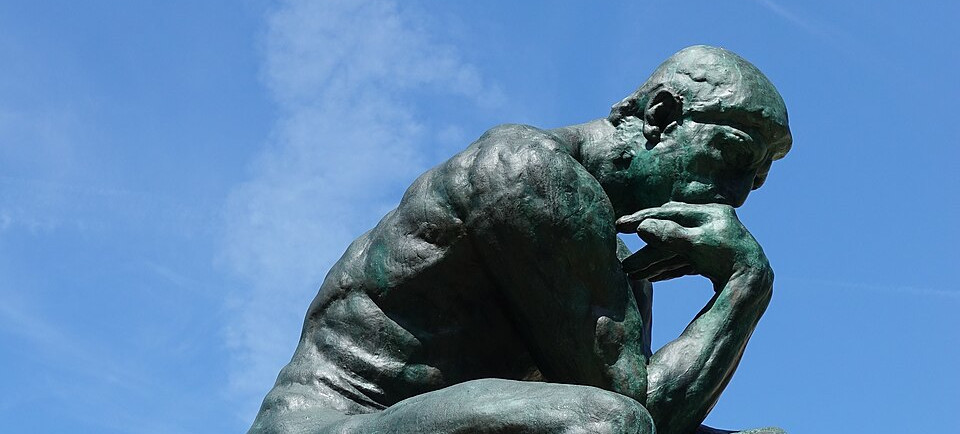
At first glance, Michelangelo and Rodin seem worlds apart. Michelangelo belonged to the sixteenth century Italian Renaissance, while Rodin worked in nineteenth century France. Between them lay three centuries of artistic transformation. Yet both artists shared a profound interest in the expressive power of the human body. Their work is a great reminder that the human form is far more than a subject to be reproduced with anatomical accuracy. And by looking at their powerful sculptures, like many, I feel compelled to rethink my own humble art practice. If you want to borrow ideas from two of the most renowned sculptors of their time to bring emotional depth and a timeless quality to your figure drawings and paintings, this is for you. Read on!
Breaking with Classical Beauty
Michelangelo is frequently presented as the embodiment of the High Renaissance. Sculptures such as David, showing an idealised male body, indeed demonstrate his extraordinary command of human anatomy, technical mastery, and sense of visual harmony. However, as Michelangelo matured, his work became increasingly dynamic and emotionally charged. A great example of this is the series of unfinished marble sculptures created for the tomb of Pope Julius II, known as the Slaves, or Prisoners, which move beyond the sense of equilibrium so characteristic of the period. Immediately, we notice that, to convey tension, conflict, and psychological depth, Michelangelo made the body twist and stretch. Notice how it almost seems to push against itself. Moreover, the gesture appears to extend beyond the physical boundaries of the figure, creating a sense of tension that seems to linger in the surrounding space.
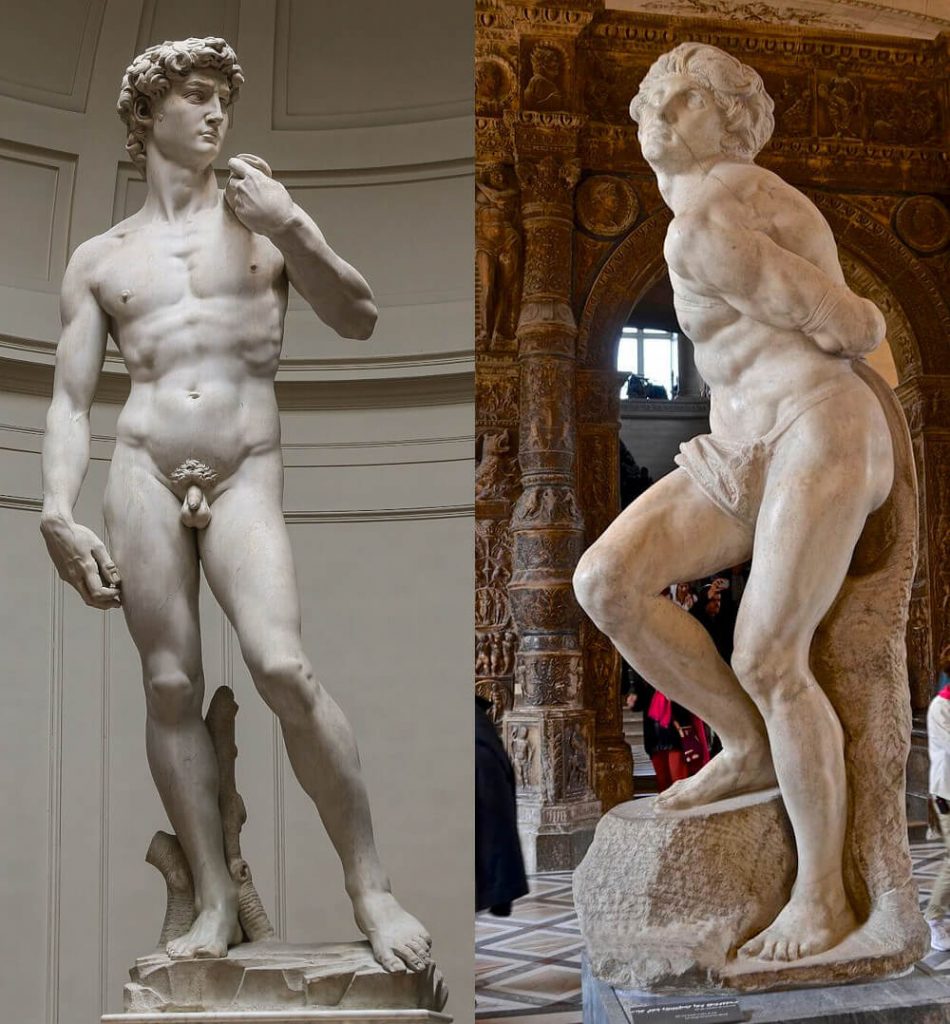
David (left) and The Rebellious Slave (right), Michelangelo. Notice the difference in dynamism and emotional intensity between the two sculptures.
The Legacy of Expressive Form
By no means did Michelangelo set out to establish a new artistic movement with his maniera propria, distinctive artistic manner. Nevertheless, his innovations profoundly influenced a younger generation of artists who admired him. These artists developed what later came to be called Mannerism, a term derived from the Italian maniera, meaning, as you already know, “style” or “manner.” Mannerist artists embraced complexity and cultivated an artistic language characterized by exaggerated poses, elongated forms, and emotional intensity in their subjects.
The figura serpentinata, or serpentine figure, was one of their characteristic poses and remains widely used today. The term refers to a figure that twists in a spiraling, snake like movement, often with the head, shoulders, torso, and hips turning in different directions. Spiraling poses allow artists to exaggerate the relationships between different parts of the body. Unlike more balanced figures, the figura serpentinata creates visual tension and a sense of instability. This instability is perceived by the viewer as a form of complex elegance and dynamic harmony. Take a look at this beautiful statue by Giambologna, composed in the figura serpentinata style, with its upward, snake like spiral movement conceived without a dominant viewpoint, offering a different perspective from every angle.
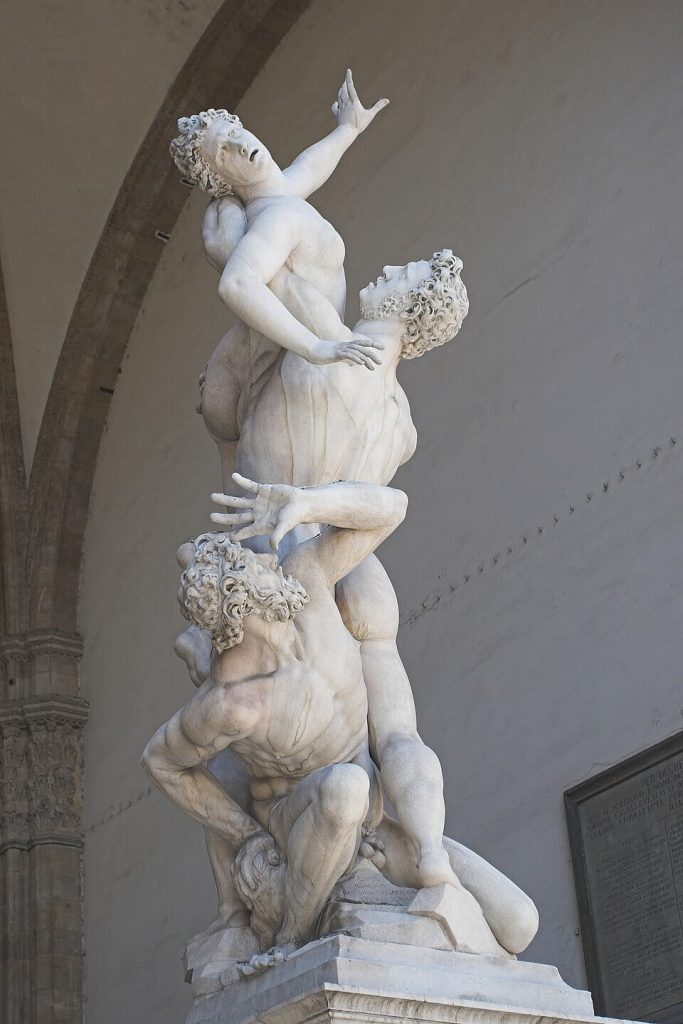
Abduction of a Sabine Woman by Giambologna.
Rodin and the Rediscovery of Michelangelo
Centuries later, Auguste Rodin, a French artist who lived and worked primarily in Paris, encountered Michelangelo’s sculptures during his travels in Italy. The experience proved transformative. He not only admired Michelangelo’s ability to communicate emotion through the body, but drew on this emotional intensity to liberate modern French sculpture from academic conventions. Rodin was a modern artist responding to the artistic conditions of the nineteenth century, a time when academic sculpture still placed great value on idealised proportions, anatomical correctness, and clearly defined forms. He challenged all these expectations. He was interested in something less perfect but more expressive.
Just look at Rodin’s Thinker. Although the figure is perfectly still, his body is charged with tension. The powerful musculature, hunched posture, and legs not quite firmly grounded all create a sense of latent tension and suggest an intense inner struggle. Rather than presenting thought as a purely intellectual act, Rodin makes it physical, almost as though the figure is thinking with his entire body. The sculpture demonstrates how pose and anatomy can convey psychological depth without relying on dramatic movement.
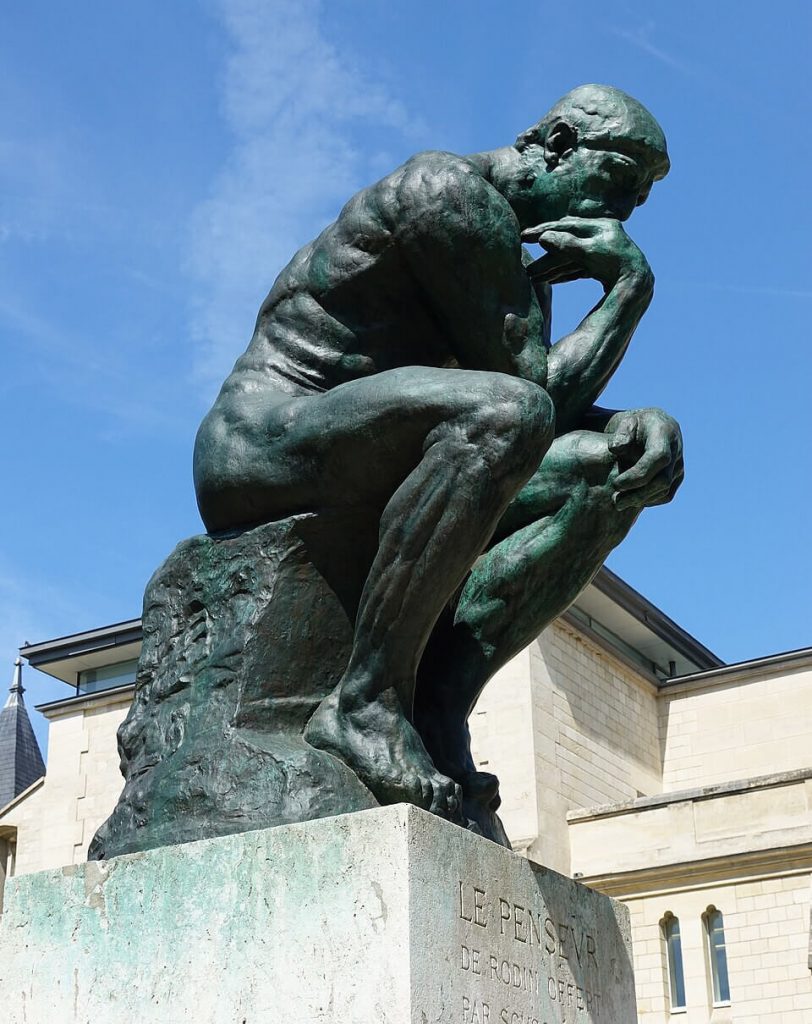
The Thinker by Rodin.
In many of his works, Rodin rejected the idea that the human body had to conform to an ideal of balance and beauty in order to be powerful. Instead, he allowed himself to distort, exaggerate, fragment, or leave parts of the figure unresolved for better communication with the public. His manipulation of the human form became a way of expressing psychological and emotional experience through the body. And he went even beyond this.
Rodin was also particularly drawn to the unfinished quality of some of Michelangelo’s works. Rather than seeing incompleteness as a failure, Rodin recognized its expressive potential. His own sculptures often leave parts of the figure unfinished. This sense of incompleteness is not a weakness. On the contrary, it invites the viewer to participate, to imagine what is missing, to complete the form mentally, and finally to add their own emotional layer to the figure.
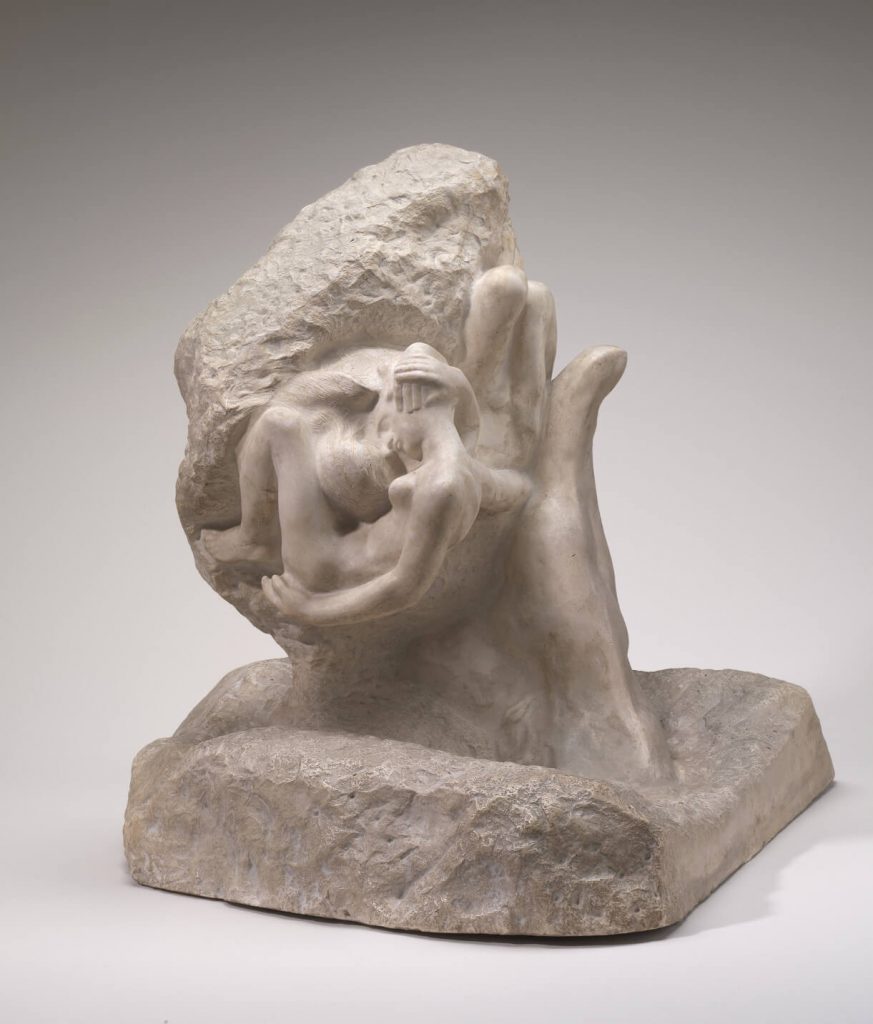
The Hand of God by Rodin.
Letting Your Figure Drawings Speak
Seeing all these powerful ideas play out in sculpture gets me thinking every time about how I can bring some of that expressive quality into my own figure studies. I personally really like working with twisting and counter twisting poses. But I could also start with any short dynamic pose and push the gesture a little beyond what I actually see. Take the twist a little further. Let the body bend, turn, or reach beyond what might seem anatomically necessary. Then step back and see what happens. Does the drawing feel more expressive? Does it have a stronger sense of emotion or movement?
Or I could deliberately leave parts of the drawing out. Anyone who has spent time drawing from life or reference probably knows the feeling. There’s always this temptation to make everything clear for the viewer, every edge, every anatomical feature, every transition from light to shadow. But some of the most compelling drawings I’ve encountered don’t give us all the information. Leaving something unresolved can give the viewer a way into the image. It allows the work to remain open for interpretation, inviting the viewer to complete it not only with their eyes, but also with their own imagination and emotion.
The human body is capable of conveying emotion, inner conflict, movement, and the complexities of human experience. It does not always need to be anatomically perfect or completely explained. The human form is something we can transform, exaggerate, simplify, fragment, and reinterpret. There is no single correct way to work with it.
—
The above text was inspired by a past exhibition at the Louvre that brought together Michelangelo and Rodin and explored the dialogue between their art. If you are a great admirer of Rodin, as I am, and are in Paris, I highly recommend visiting the Musée Rodin, housed in the eighteenth century Hôtel Biron, where the artist once lived. And if all of this has made you want to explore the expressive possibilities of the human form yourself, you are very welcome to join us for our weekly life drawing practice. It is a chance to experiment, observe, and play with gesture, movement, and expression in your own work.